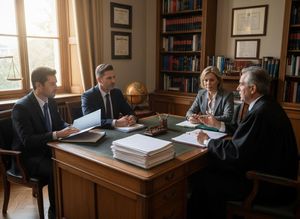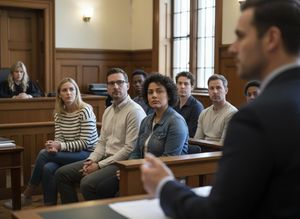
What Is a Jury Trial in California?

A jury trial is the stage of a criminal case where the prosecution must finally prove its case beyond a reasonable doubt to a group of citizens. It is the highest burden in the legal system—and the one that actually decides guilt or innocence.

Everything that comes before it—arrest, charging, arraignment, pretrial motions, and even the preliminary hearing—is about whether the case can proceed to this stage. The jury trial is where the case is won or lost.

If you are facing criminal charges in California, understanding how a jury trial actually works—and how it is different from everything leading up to it is critical.

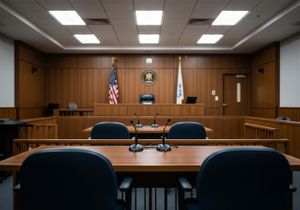
The History: Why Jury Trials Exist

The right to a jury trial comes out of English common law and was built into the American system as a protection against government power.

Historically, the jury was designed as a buffer between the accused and the state. Instead of a judge or government official deciding guilt, ordinary citizens evaluate the evidence and apply the law.

That principle is now embedded in both:

  • the Sixth Amendment to the U.S. Constitution (right to jury trial), and
  • the California Constitution.

In California criminal cases, this right is codified in statutes like Penal Code section 1042, which provides for jury trials in criminal actions. The core idea has not changed in centuries: the government does not get to convict someone unless it can prove the case before a jury of the public.

The Burden of Proof at Trial

At trial, the prosecution must prove each element of the offense beyond a reasonable doubt. This is codified in Penal Code section 1096. This standard is intentionally high. It means:

  • the defendant starts presumed innocent,
  • the defense does not have to prove anything,
  • and if there is a reasonable doubt, the jury must return a not guilty verdict.

It is the highest burden of proof in the entire justice system and is fundamentally different than a preliminary hearing, family court case, or a civil trial.

How a Jury Trial Actually Proceeds

A jury trial follows a structured sequence. Each side has defined opportunities to present evidence, challenge the other side, and argue its case.

1. Jury Selection (Voir Dire)

The trial begins with jury selection.

The court brings in a panel of potential jurors. The judge and attorneys question them to determine:

  • bias,
  • life experiences,
  • ability to be fair,
  • attitudes toward law enforcement or specific issues (e.g., DUI, domestic violence) that would make them unfit to serve.

Each side can remove jurors:

  • for cause (bias or inability to be fair), or
  • through peremptory challenges (limited number, no reason required—subject to constitutional limits like Batson/Wheeler).

This stage is often underestimated. Experienced attorneys know that the case is often won and lost during jury selection. When I select juries for my cases–I expect my client to be an active participant in the process and want to consult with them when deciding which jurors are and aren’t good fits.

2. Opening Statements

Once the jury is selected, each side gives an opening statement.

  • The prosecutor goes first, outlining what they believe the evidence will show.
  • The defense may give an opening immediately or reserve it until later.

Important point:

Opening statements are not evidence. They are a roadmap—a preview of what each side intends to prove (or challenge).

3. The Prosecution’s Case-in-Chief

The prosecution has the burden of proof and so presents its case first.

This includes:

  • witness testimony,
  • physical evidence,
  • expert testimony,
  • recordings, documents, and forensic evidence.

The prosecution must present all evidence necessary to prove every element of the charged offenses.

Cross-Examination

After each prosecution witness testifies, the defense has the right to cross-examine.

This is where many trials are won. Cross-examination is used to:

  • expose inconsistencies,
  • challenge credibility,
  • highlight bias,
  • show gaps in the investigation,
  • undermine key elements of the prosecution’s case.

4. Motion for Acquittal

After the prosecution rests, the defense can make a motion under Penal Code section 1118.1. This asks the judge to dismiss the case because the prosecution failed to present sufficient evidence.

These motions are rarely granted—but when they are, the case ends immediately.

5. The Defense Case (Optional)

This is one of the most misunderstood parts of trial: The defense does not have to present any evidence. The defense may call their own witnesses and present their own evidence, but they have no obligation to do so. The defense can simply be that the prosecution failed in their burden of proof, or that the evidence they presented shows that the defense is entitled to an acquittal. In practice, the defense will typically present materials and evidence to a jury, but they have no burden of proof to do so.

The defendant also has an absolute right not to testify, and the jury cannot hold that against them.

This is a strategic decision in every case and is arguably the most important decision that a defendant will make during the trial.

6. Rebuttal

If the defense presents evidence, the prosecution may present rebuttal evidence to respond. This is limited to issues raised by the defense.

7. Closing Arguments

After all evidence is presented:

  • The prosecution argues first, summarizing the evidence.
  • The defense argues second, highlighting evidence and reasonable doubt.
  • The prosecution gets final rebuttal.

This is where each side connects the dots for the jury.

8. Jury Instructions

The judge reads the law to the jury.

These instructions explain:

  • the elements of each offense,
  • definitions of legal terms,
  • how to evaluate evidence,
  • the burden of proof.

9. Deliberation and Verdict

The jury deliberates in private.

In California criminal cases:

  • verdicts must be unanimous,
  • all jurors must agree on guilt or innocence.

If the jury cannot agree, it results in a hung jury, and the case may be dismissed or tried again.

What Is Allowed and Not Allowed at Trial

Jury trials are governed by strict rules of evidence.

What Is Allowed

  • Relevant evidence (tends to prove or disprove a fact)
  • Witness testimony with personal knowledge
  • Expert opinions (under proper standards)
  • Properly authenticated documents and recordings

What Is Not Allowed (Generally)

  • Irrelevant evidence
  • Hearsay (with many exceptions)
  • Speculation and guessword
  • Character evidence used improperly
  • Unduly prejudicial evidence (Evidence Code section 352 balancing)

The trial judge acts as a gatekeeper, deciding what the jury is allowed to hear.

Motions in Limine: What They Are and Why They Matter

Before the jury ever hears the case, both sides file motions in limine. These are requests asking the judge to decide what evidence will be allowed or excluded at trial.

Typical motions in limine address:

  • prior convictions,
  • statements by the defendant,
  • expert testimony,
  • prior bad acts,
  • identification procedures,
  • evidence obtained through searches or seizures.

These motions shape the battlefield. When a key piece of evidence can be excluded—or admitted—before the trial even starts it can completely change the trajectory of the case.

What Makes a Trial Attorney Different

Not every criminal defense attorney is a trial attorney. There is a genuine difference and it matters.

Trial Lawyers Focus on Persuasion, Not Just Procedure

Trial work is not just about knowing the law. It is about:

  • storytelling,
  • credibility,
  • timing,
  • tone,
  • reading a jury,
  • making complex facts understandable.

Trial Lawyers Are Comfortable in Uncertainty

Trials are unpredictable:

  • witnesses say unexpected things,
  • evidence lands differently than expected,
  • jurors react in real time.

A trial attorney adjusts on the fly and has to be tactically sound in preparing counterattacks.

Trial Lawyers Think in Themes

Good trial lawyers build a theme that runs through the entire case:

  • mistaken identity,
  • unreliable investigation,
  • lack of intent,
  • overcharging,
  • credibility issues.

Trial Lawyers Understand What Not to Do

Equally important: knowing when not to ask a question, not to object, not to present evidence, and not to overargue. Overtrying a case can lose it.

Strategic Realities

Most Cases Do Not Go to Trial

The vast majority of cases resolve before trial. But the ability and willingness to go to trial is what often drives better outcomes in negotiations.

The Jury Sees the Case Fresh

The jury does not see police reports or charging decisions.

They see:

  • live testimony,
  • exhibits admitted in court,
  • arguments from both sides.

That can dramatically change how a case looks compared to earlier stages.

The Prosecution Must Prove the Case—Not the Defense

Clients often feel like they must “prove their innocence.” That is not how the system works: the defense wins if the prosecution fails.

Small Details Matter

Jurors notice things like:

  • how witnesses answer questions,
  • inconsistencies,
  • demeanor,
  • gaps in timelines,
  • whether something just “doesn’t add up.”

Trial is not just about big legal arguments—it is about credibility. Beyond this, the jury deserves the respect of the client and attorney alike. This isn’t a vacation for them, this is inconvenient, this put them into a very uncomfortable and stressful position. Showing up early, presenting the case efficiently, and respecting their time and effort is the minimum we can do. They notice when people don’t put that effort forward.

Next Step

If you are facing a criminal case in the bay area then getting up to speed on this process will help you establish a beneficial working relationship with your attorney. Understanding how a jury trial works is critical—but knowing how to prepare for one is what actually matters.

Like I mentioned before, I expect my clients to be active participants in the jury trial process. I’m pretty confident in my ability to try a case, but I have found that the best results come when a client is engaged and helping me out at the same time.

If you or a loved one has a case they need to address, you can directly send me your information here:

Secure online intake form