
Articles
Featured Content

The Lifecycle of a Criminal Case
Criminal Defense Overview
A California criminal case does not move in one straight line. Cases begin with an investigation or arrest, but many never reach trial. Some are rejected before filing. Some resolve at arraignment. Some felony cases are narrowed or dismissed at the preliminary hearing. Others proceed all the way through jury trial.
Still, there is a classic path. If you understand that path, it becomes much easier to understand what is happening in your own case and why timing, charging decisions, and defense strategy matter so much for the fate of a case.
This page is my attempt to illustrate the usual lifecycle of a California criminal case from arrest through jury trial and to highlight the major differences between misdemeanor and felony procedure.
more
What Is an Arraignment in California?
An arraignment is the first formal court appearance after criminal charges are filed. It is the stage where:
- Charges are formally read or acknowledged
- The defendant enters a plea (usually “not guilty”; this is not necessarily done in every case)
- Bail is addressed
- Protective orders may be issued
- Future court dates are set

What Is a Preliminary Hearing in California?
If you are charged with a felony in California, one of the major events in the case is the preliminary hearing (aka “The Prelim”). This hearing is not the trial. No jury decides guilt or innocence there. Instead, a live-testimony hearing is held and the judge decides whether the prosecution has shown enough evidence to keep the case moving forward and justify a jury trial.
A preliminary hearing can matter a great deal. It can expose weaknesses in the case, lock witnesses into testimony, narrow issues, support later motions, and sometimes result in charges being dismissed or reduced. It can also be a tactical trap if the defense gives away too much too early.
more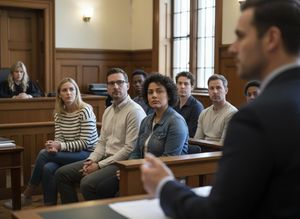
What Is a Jury Trial in California?
A jury trial is the stage of a criminal case where the prosecution must finally prove its case beyond a reasonable doubt to a group of citizens. It is the highest burden in the legal system—and the one that actually decides guilt or innocence.
Everything that comes before it—arrest, charging, arraignment, pretrial motions, and even the preliminary hearing—is about whether the case can proceed to this stage. The jury trial is where the case is won or lost.
If you are facing criminal charges in California, understanding how a jury trial actually works—and how it is different from everything leading up to it is critical.
more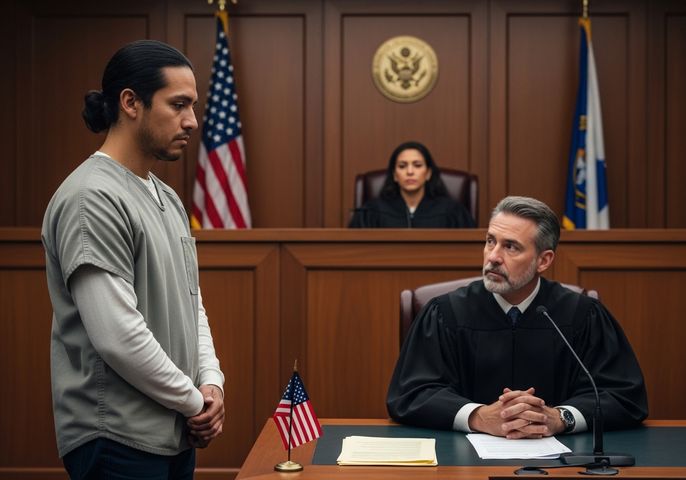
AB 333 and Gang Allegations in California Criminal Cases
Assembly Bill 333 (AB 333) fundamentally changed how criminal street gang allegations are charged, proven, and tried in California.
If your case includes a gang allegation under California Penal Code §186.22, AB 333 matters—often more than the underlying charge itself.
AB 333 sharply limited:
- What qualifies as a criminal street gang
- What evidence is admissible
- How gang enhancements are tried
- How predicate offenses must be proven
Many cases are still being charged as if AB 333 never passed. That creates opportunity—but only if the law is applied correctly and early.
more
Arrest Record Sealing in California
An arrest record does not automatically disappear — even if no charges were ever filed. In California, arrest record sealing is governed primarily by:
more
Assault and Battery Charges in California
Assault and battery cases range from minor altercations to serious felony allegations carrying strike exposure. The difference between a misdemeanor and a prison case often turns on injury level, weapon use, and how the incident is framed in the first police report.
more
California DUI Offenses: The Lifecycle of a Case, the DMV vs. Court, and What Outcomes Look Like
A California DUI is typically two cases running at the same time:
- The criminal court case (prosecution, plea, trial, probation, fines, jail, classes), and
- The DMV administrative case (your license—suspension, restricted license, reinstatement).
They overlap, but they are not the same case, they use different rules, and you can “win” one and still lose the other. The DMV arena operates completely independently of the Criminal Justice system; the DMV does not have the same rules of evidence, due process guarantees, or timelines as the criminal case and needs to be addressed completely separately. Your attorney should be handling both cases.
more
California Gun & Firearm Laws: The Big Picture (and the Charges People Actually Get Filed With)
California treats firearm cases as high-stakes, high-leverage prosecutions. Even when there’s no allegation the gun was fired, prosecutors routinely file gun charges to (1) increase exposure, (2) trigger custody, and (3) force unfavorable plea pressure. The statutes are also technical—people get charged for paperwork, configuration, location, or status issues, not just “having a gun.”
This page lays out how California gun laws work at a practical level, what’s most commonly charged, and what those charges typically turn on.
(Note: The Supreme Court of the United States has recently submitted new opinions on the validity of certain gun laws; at least two of those opinions affect California laws and are being evaluated and are currently being reviewed under appeal)
more
Criminal Protective Orders in California Domestic Violence Cases
What they are, why they happen at arraignment, and how to protect yourself from accidental violations
A Criminal Protective Order (CPO) is a court order issued inside a criminal case (Superior Court). In domestic violence prosecutions, a CPO is typically imposed **immediately—at arraignment—**and it controls contact between the accused and the “protected person” while the case is pending.
In practical terms: the CPO is often the first major consequence of a DV arrest—sometimes before anyone has had time to think through housing, childcare, or work logistics.
more
Criminal Restitution in California – Rules, Rights, and Limits
What Is Criminal Restitution?
Criminal restitution is money a defendant is ordered to pay to compensate a victim for economic losses caused by a crime. In California, restitution is mandatory in nearly every criminal case where a victim has suffered a financial loss.
Restitution is not a fine. It is not punishment. It is compensation. The legal purpose is to make the victim financially whole—not to penalize the defendant beyond the loss actually caused.
more
Domestic Violence Charges in California
Domestic violence (DV) cases are among the most commonly charged and aggressively prosecuted offenses in California. They are also among the most fact-specific and context-sensitive cases in criminal law.
more
Drug and Narcotic Offenses
California Drug Charges
California drug/narcotics cases range from simple possession and use offenses to serious sales and trafficking allegations carrying significant custody exposure.
more
DUI Offender Programs in California
A DUI Offender Program is a state-mandated alcohol education and counseling program required in most California DUI and reckless driving cases. These programs are licensed by the California Department of Health Care Services (DHCS) and must be completed through an approved provider. (Be very careful signing up for these–there are plenty of knock-off courses that will take your money and then not be accepted by the DMV/Court).
If you are convicted of a DUI or wet+reckless—completion of the appropriate DUI program is not optional. It is required by law and enforced by both the court and the DMV in every single case.
more
Gun Violence Restraining Orders (GVROs) in California
A Gun Violence Restraining Order (GVRO) is a civil court order that temporarily prohibits a person from owning, possessing, purchasing, receiving, or attempting to purchase firearms and ammunition.
Although GVROs are civil orders, they frequently arise out of criminal investigations or pending criminal cases, and violations of a GVRO order carry serious felony exposure.
California’s GVRO laws have expanded significantly in recent years, including recent legislative changes signed by the Governor which makes them more common, easier for the County to pursue, and more dangerous for gun-owners than before.
more
HIPAA Waivers: What They Are and Why Your Attorney May Need One
If you’re involved in a criminal case and I ask you to sign a HIPAA waiver, that request is not routine paperwork. It serves a specific legal purpose, and it should be handled deliberately.
more
How Bail Works in California Criminal Cases
“Bail” is the mechanism that allows a person who has been arrested to be released from custody while their case is pending. It is not a fine. It is not a punishment. It is a financial guarantee that the person will return to court.
more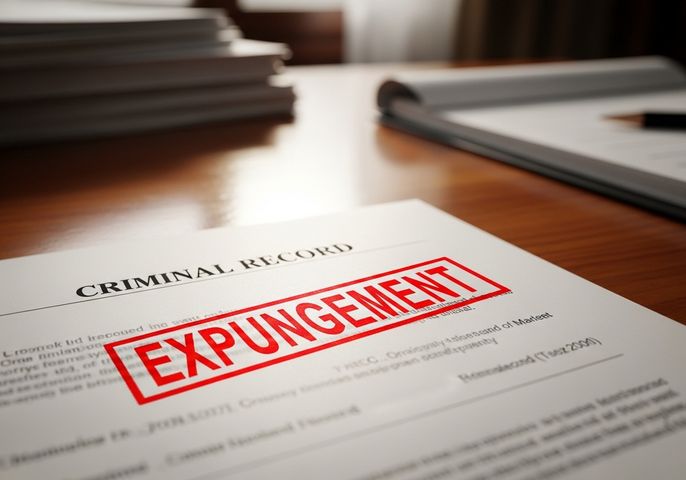
How does an Expungement work?
What It Is, How It Works, and What It Actually Does
In California, “expungement” usually refers to relief under Penal Code §1203.4 (and related sections). It allows a person who successfully completed probation to withdraw a previous plea of guilty or no contest and have the case dismissed.
It does not erase the arrest.
It does not seal the entire government file.
It does not eliminate the conviction for all purposes.
It does change how the case appears on most background checks and can materially improve employment prospects. It allows for a person to lawfully assert that they were not convicted of the case (in most circumstances)
more
Juvenile Delinquency Law in California
Juvenile court is not “adult court for minors.” It is a separate legal system governed primarily by the California Welfare & Institutions Code, not the Penal Code.
more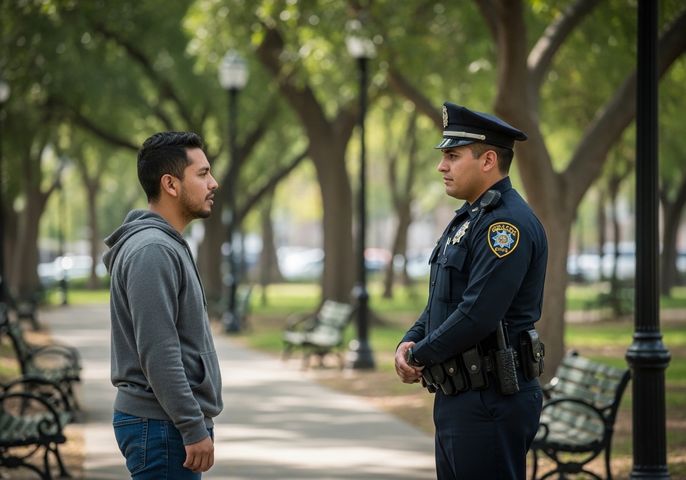
Know Your Rights During Police Interrogations
If law enforcement wants to question you, the most important thing to understand is this:
You are not required to speak to the police. Not during a traffic stop. Not at your home. Not at the station. Not “just to clear things up.”
more



Misdemeanor vs. Felony: What’s the Difference?
The difference between a felony and a misdemeanor is not just about jail time. It affects:
- Where the case is filed
- How the case is prosecuted
- Custody exposure
- Long-term consequences
- Record impact
- Strike implications
- Immigration consequences
The classification of an offense determines how serious the court treats the case.
more
Penal Code §422 – Criminal Threats in California
Penal Code §422 makes it a crime to willfully threaten to commit a crime that would result in death or great bodily injury to another person, when the threat is intended to be taken seriously and causes sustained fear.
Criminal threats cases are highly fact-specific. They frequently arise out of:
- Domestic disputes
- Text message exchanges
- Workplace conflicts
- Social media posts
- Road rage incidents
- School-related allegations
Section 422 is a wobbler, meaning it can be charged as either a misdemeanor or a felony under Penal Code §17(b).
The classification dramatically affects exposure.
more
Preliminary Hearing in California
A preliminary hearing (often called a “prelim”) is a court proceeding in felony cases where a judge determines whether there is enough evidence to require the defendant to stand trial.
It is not a trial. It is a screening mechanism to weed out baseless charges or narrow the scope of a future jury trial.
more
San Mateo County Sheriff’s Work Program (SWP)
The Sheriff’s Work Program (SWP) in San Mateo County allows certain defendants to serve a jail sentence by performing unpaid work instead of being physically incarcerated. It is not automatic, not a right, and not run by the court. Final acceptance rests entirely with the Sheriff’s Office.
Understanding how the program works—and how eligibility decisions are actually made—can matter significantly when sentencing alternatives are being negotiated.
To apply, you MUST call their office: (650) 599-3030
more
Brendan Barrett Explains Santa Clara County's Sentencing Alternative Program (SAP)
What Is the Sentencing Alternative Program (SAP)?
The Sentencing Alternative Program (SAP) is a court-approved community service program used in Santa Clara County as either (a) an independent term of a plea bargain or (b) an alternative way to satisfy a jail sentence. Instead of serving time in county jail—or performing Sheriff-supervised labor—some defendants may be given the chance to complete regular community service hours that are supervised by SAP and reported directly back to the sentencing judge.
SAP is distinct from Sheriff-run work programs. It is a non-profit agency, not the Sheriff’s Office, and focuses on traditional community service placements rather than custodial or quasi-custodial labor.
If authorized by the judge, SAP allows a defendant to serve a “jail” sentence through verified community service instead of incarceration.
more

The California Racial Justice Act (RJA)
The California Racial Justice Act fundamentally changed how courts evaluate racial bias in criminal cases. Codified at Penal Code §745, the RJA provides a direct statutory remedy when race, ethnicity, or national origin plays any role in charging decisions, plea bargaining, convictions, or sentencing.
The RJA does not require proof of intentional discrimination. It focuses on outcomes and patterns, not motives. That shift alone has altered how cases are litigated from the charging stage through post-conviction review.
more
The Lifecycle of a Criminal Case
Criminal Defense Overview
A California criminal case does not move in one straight line. Cases begin with an investigation or arrest, but many never reach trial. Some are rejected before filing. Some resolve at arraignment. Some felony cases are narrowed or dismissed at the preliminary hearing. Others proceed all the way through jury trial.
Still, there is a classic path. If you understand that path, it becomes much easier to understand what is happening in your own case and why timing, charging decisions, and defense strategy matter so much for the fate of a case.
This page is my attempt to illustrate the usual lifecycle of a California criminal case from arrest through jury trial and to highlight the major differences between misdemeanor and felony procedure.
more
Theft, Burglary, Robbery & Property Crimes in California
Property crimes in California range from low-level misdemeanor theft cases to serious violent felonies carrying strike exposure.
more
Theft Crimes in California – Types, Charges, and Penalties
Overview of Theft Crimes in California
California law recognizes multiple forms of theft, ranging from minor shoplifting cases to serious felony financial crimes. While the factual scenarios differ, all theft offenses share a common legal principle: the unlawful taking of property belonging to someone else with the intent to permanently deprive the owner of it.
The severity of a theft charge depends on:
- The value of the property
- The type of property taken
- How the theft was committed
- The defendant’s criminal history
- Whether force, fear, or deception was used
- Whether the theft was from a individual, business, government, or specifically vulnerable person
Understanding how California categorizes theft offenses is critical, because the difference between a misdemeanor and a felony often turns on technical details.
more
Violations of Probation (VOP) in California
A violation of probation (commonly called a “VOP”) is not a new criminal case. It is a proceeding in which the court determines whether a person has violated the terms of an existing probation grant.
The governing statute is Penal Code §1203.2, which gives courts authority to revoke, modify, or terminate probation when a violation is alleged. Probation violation proceedings are completely different from standard criminal prosecutions. The rules, burden of proof, and consequences operate under a separate framework.
What is often most concerning is that if a VOP is issued against someone and they’re put in custody–they are often subject to a “probation hold” which makes them unable to post bail and be released.
more
What Happens After an Arrest in California?
An arrest is not a conviction. It is the beginning of a process.
After someone is arrested in California, the case moves through a series of procedural stages involving law enforcement, jail, the District Attorney, and the Superior Court system.
more
What Happens If You Refuse a Breath or Blood Test in California?
Refusing a chemical test after a DUI arrest in California triggers two separate systems of punishment:
- A DMV Administrative Per Se (APS) license suspension, and
- Enhanced penalties in the criminal court case.
These two cases move on separate and parallel tracks. Winning one does not automatically resolve the other and they do not intersect with each other.
If an officer arrests you for DUI and you refuse a required chemical test, California law imposes mandatory consequences—even if you are never convicted of DUI.
Note: this applies to the chemical test that is requested AFTER the arrest. This does not apply to the handheld breathalyzer on the side of the road (aka the P.A.S. machine). You are lawfully allowed to decline to blow into the PAS machine before an arrest so long as you are not on probation.
These laws were codified in 2019 in Senate Bill 1046
more
What is a criminal street gang?
Criminal Street Gang Allegations in California
more
What Is a Jury Trial in California?
A jury trial is the stage of a criminal case where the prosecution must finally prove its case beyond a reasonable doubt to a group of citizens. It is the highest burden in the legal system—and the one that actually decides guilt or innocence.
Everything that comes before it—arrest, charging, arraignment, pretrial motions, and even the preliminary hearing—is about whether the case can proceed to this stage. The jury trial is where the case is won or lost.
If you are facing criminal charges in California, understanding how a jury trial actually works—and how it is different from everything leading up to it is critical.
more
What Is a Preliminary Hearing in California?
If you are charged with a felony in California, one of the major events in the case is the preliminary hearing (aka “The Prelim”). This hearing is not the trial. No jury decides guilt or innocence there. Instead, a live-testimony hearing is held and the judge decides whether the prosecution has shown enough evidence to keep the case moving forward and justify a jury trial.
A preliminary hearing can matter a great deal. It can expose weaknesses in the case, lock witnesses into testimony, narrow issues, support later motions, and sometimes result in charges being dismissed or reduced. It can also be a tactical trap if the defense gives away too much too early.
more
What is a “Livescan” record?
A Livescan record is the official California criminal history report generated after your fingerprints are electronically submitted to the California Department of Justice (DOJ).
Unlike commercial background checks (which rely on name and date of birth), a Livescan is tied to biometric identifiers. It pulls from DOJ records and, when applicable, Federal Bureau of Investigation databases. That makes it the most authoritative snapshot of your California criminal history.
For post-conviction work, it is often the starting point.
more
What Is a “Strike” Offense in California?
A “strike” offense refers to a serious felony or a violent felony as defined under California’s Three Strikes law.
more
What Is an Arraignment in California?
An arraignment is the first formal court appearance after criminal charges are filed. It is the stage where:
- Charges are formally read or acknowledged
- The defendant enters a plea (usually “not guilty”; this is not necessarily done in every case)
- Bail is addressed
- Protective orders may be issued
- Future court dates are set
What Is an SR-22 in California DUI Cases?
An SR-22 is not an insurance policy. It is a certificate of financial responsibility filed with the California Department of Motor Vehicles (DMV) by an insurance company confirming that you carry the minimum liability insurance required by law.
In every DUI case in California the DMV will require a driver to submit an SR-22 before they will reinstate or issue any form of driving privilege after a suspension.
more
What is felony murder rule?
The Felony Murder Rule is a legal doctrine that allows a murder charge to be filed even when the accused did not personally kill anyone, so long as a death occurred during the commission or attempted commission of certain felonies.
In California, this rule still exists—but in a much narrower form than it once did.
The governing statutes are California Penal Code §§189 and 190.2, as significantly amended by Senate Bill 1437.
more
What is “natural and probable consequences law?” How has it changed?
The Natural and Probable Consequences Doctrine in California
more
“White Collar” Crimes in California
“White collar crime” is not a single charge. It is a category of financial and fraud-based offenses involving deception, theft, or misuse of funds. These are typically done without physical violence but with substantial financial exposure.
These cases are document-heavy, investigation-driven, and frequently prosecuted as felonies.
more