
Domestic violence (DV) cases are among the most commonly charged and aggressively prosecuted offenses in California. They are also among the most fact-specific and context-sensitive cases in criminal law.
Domestic Violence Charges in California
Unlike many other offenses, DV cases frequently:
- Move quickly at arraignment
- Result in immediate no-contact criminal protective orders
- Proceed even when an alleged victim wants the case dropped or is unavailable
- Rely heavily on 911 calls, body-worn camera footage, and spontaneous statements
Common domestic violence charges arise under:
Misdemeanor Domestic battery
Misdemeanor or Felony “Corporal injury” to a spouse/cohabitant
Assault by means of force likely to produce great bodily injury
Misdemeanor or Felony “Criminal threats”
Destroying or disabling a phone or communication device
False imprisonment
Violation of a court order/ restraining order
The exposure, leverage, and long-term consequences vary dramatically depending on which section is filed.
Penal Code §243(e)(1) — Domestic Battery
This statute covers offensive or harmful touching against:
- A spouse or former spouse
- A cohabitant or former cohabitant
- A dating partner
- The parent of one’s child
Injury is not required. Even minor or non-visible force can qualify. This is any unwanted physical contact.
Potential penalties (misdemeanor):
- Up to 1 year in county jail
- Fines and fees
- Probation (often 3 years)
- 52-week batterer’s intervention program
- Protective order
- Loss of firearm rights
These cases often turn on:
- Credibility of a witness
- Statements made during heated moments
- Bodycam footage, 911 phone recordings
- Lack of visible injury
Penal Code §273.5 — Corporal Injury
This statute requires proof of a traumatic condition (even minor injury such as redness or swelling).
It is more serious than §243(e)(1) and is often charged as a felony.
Potential penalties:
- Can be charged as misdemeanor or felony depending on circumstances/context
- Misdemeanor: up to 1 year in jail
- Felony: 2, 3, or 4 years in state prison
- Probation with 52-week program
- Protective order
- Possible “strike” exposure if great bodily injury is alleged
Prior DV convictions increase penalties significantly.
Penal Code §245(a)(4) — Force Likely to Produce Great Bodily Injury
Often filed in DV cases involving:
- Choking/strangulation allegations
- Repeated blows
- Significant injuries
This is typically a felony.
Potential penalties:
- 2, 3, or 4 years in state prison
- Strike consequences in certain scenarios
- GBI enhancements if alleged
- Mandatory protective orders
Penal Code §422 — Criminal Threats
This statute applies when someone allegedly:
- Makes a serious threat of death or great bodily injury
- Intends the statement to be taken as a threat
- Causes sustained fear
Common in domestic contexts involving text messages or recorded statements.
Potential penalties:
- Misdemeanor or felony
- Felony exposure: up to 3 years
- This is considered a “Strike” offense if convicted as a felony
Penal Code §591 — Destruction of a Phone
Often charged when an allegation includes:
- Taking or breaking a phone
- Disabling communication during an argument
This charge is commonly paired with other DV offenses.
Potential penalties:
- County Jail
- 52 week DV course
Penal Code §236 — False Imprisonment
Applies where someone is alleged to have restrained another person without consent.
Can be charged as:
- Misdemeanor (no violence)
- Felony (if violence or menace involved)
Potential penalties:
- Up to 1 year (misdemeanor)
- Up to 3 years (felony)
Criminal Protective Orders at Arraignment
In nearly every DV case, the judge — at the request of the District Attorney — will seek to issue a Criminal Protective Order (CPO) at arraignment.
This often includes:
- Full no-contact provisions
- Stay-away orders from home or workplace
- Firearm prohibitions
- Move-out orders
These are typically issued even if the alleged victim does not request them.
Fighting a No-Contact Order
Courts are cautious about lifting or modifying no-contact orders early. However, one structured way to seek modification is through:
- Demonstrating stability and compliance
- Showing lack of ongoing threat
- Organized mitigation
- In some cases, participation by the alleged victim in a domestic violence victim awareness course arranged through independent counsel
Judges want structured assurances, not informal promises. This is one example of when early legal positioning is crucial.
Why Acting Quickly Matters in DV Cases
More than almost any other case type, DV cases require immediate action.
Evidence disappears quickly:
- Bruising changes
- Recordings age out or get lost
- Witness memories shift
- Text message threads get deleted
Early defense work may involve:
- Preserving video evidence
- Securing independent medical documentation
- Organizing character and relationship history
- Identifying inconsistencies in initial statements
- Contextualizing the incident
- Building mitigation materials to show high moral character
Delay weakens defense leverage in many cases but most notably in DV cases.
DV Cases Are Deeply Fact-Specific
No two domestic violence cases look the same.
Key variables include:
- Relationship history
- Mutual combat issues
- Alcohol involvement
- Who called 911
- Recantation dynamics
- Defensive injuries
- Prior police contacts
- Third party witnesses (family, neighbors, strangers)
- Children present
Context can dramatically change how a case resolves.
More than most criminal charges, DV cases hinge on:
- Tone
- Timing
- Video
- Statements made in moments of crisis
Possible Collateral Consequences
In addition to criminal penalties, DV convictions may trigger:
- Firearm prohibitions (state and federal)
- Immigration consequences (DV convictions are extremely problematic in immigration cases)
- Professional licensing issues
- Family court implications
- Child custody consequences
- Long probationary terms
Bottom Line
Domestic violence cases move fast, carry emotional weight, and trigger immediate protective orders and leverage.
They are:
- Aggressively prosecuted
- Highly fact-driven
- Sensitive to context
- Often dependent on early evidence preservation
The difference between a reduction, a dismissal, and a felony conviction often turns on what is done in the first weeks of the case.
Next Step
If you or a family member is facing domestic violence charges under Penal Code §§243(e)(1), 273.5, 245(a)(4), 422, 591, or 236 in California — and you want a defense review focused on the specific statute(s) filed, the protective order exposure, and the strategic options available early in the case — you can send your information to me here:
Featured Content

Criminal Protective Orders in California Domestic Violence Cases
What they are, why they happen at arraignment, and how to protect yourself from accidental violations
A Criminal Protective Order (CPO) is a court order issued inside a criminal case (Superior Court). In domestic violence prosecutions, a CPO is typically imposed **immediately—at arraignment—**and it controls contact between the accused and the “protected person” while the case is pending.
In practical terms: the CPO is often the first major consequence of a DV arrest—sometimes before anyone has had time to think through housing, childcare, or work logistics.
more
Gun Violence Restraining Orders (GVROs) in California
A Gun Violence Restraining Order (GVRO) is a civil court order that temporarily prohibits a person from owning, possessing, purchasing, receiving, or attempting to purchase firearms and ammunition.
Although GVROs are civil orders, they frequently arise out of criminal investigations or pending criminal cases, and violations of a GVRO order carry serious felony exposure.
California’s GVRO laws have expanded significantly in recent years, including recent legislative changes signed by the Governor which makes them more common, easier for the County to pursue, and more dangerous for gun-owners than before.
more
The Lifecycle of a Criminal Case
Criminal Defense Overview
A California criminal case does not move in one straight line. Cases begin with an investigation or arrest, but many never reach trial. Some are rejected before filing. Some resolve at arraignment. Some felony cases are narrowed or dismissed at the preliminary hearing. Others proceed all the way through jury trial.
Still, there is a classic path. If you understand that path, it becomes much easier to understand what is happening in your own case and why timing, charging decisions, and defense strategy matter so much for the fate of a case.
This page is my attempt to illustrate the usual lifecycle of a California criminal case from arrest through jury trial and to highlight the major differences between misdemeanor and felony procedure.
more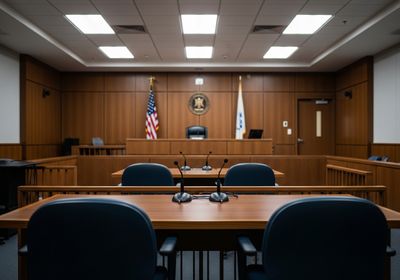
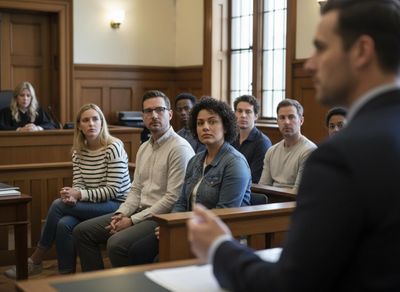
What Is an Arraignment in California?
An arraignment is the first formal court appearance after criminal charges are filed. It is the stage where:
- Charges are formally read or acknowledged
- The defendant enters a plea (usually “not guilty”; this is not necessarily done in every case)
- Bail is addressed
- Protective orders may be issued
- Future court dates are set
What Is a Jury Trial in California?
A jury trial is the stage of a criminal case where the prosecution must finally prove its case beyond a reasonable doubt to a group of citizens. It is the highest burden in the legal system—and the one that actually decides guilt or innocence.
Everything that comes before it—arrest, charging, arraignment, pretrial motions, and even the preliminary hearing—is about whether the case can proceed to this stage. The jury trial is where the case is won or lost.
If you are facing criminal charges in California, understanding how a jury trial actually works—and how it is different from everything leading up to it is critical.
more
Misdemeanor vs. Felony: What’s the Difference?
The difference between a felony and a misdemeanor is not just about jail time. It affects:
- Where the case is filed
- How the case is prosecuted
- Custody exposure
- Long-term consequences
- Record impact
- Strike implications
- Immigration consequences
The classification of an offense determines how serious the court treats the case.
more